
A private medical insurer (PMI) might be expected to answer employee calls for health benefits by giving staff access to its own brand of PMI, however, Rebecca Pearson, general manager at Bupa UK Care Services, said that “actively listening to staff” led the employer to take a different route.
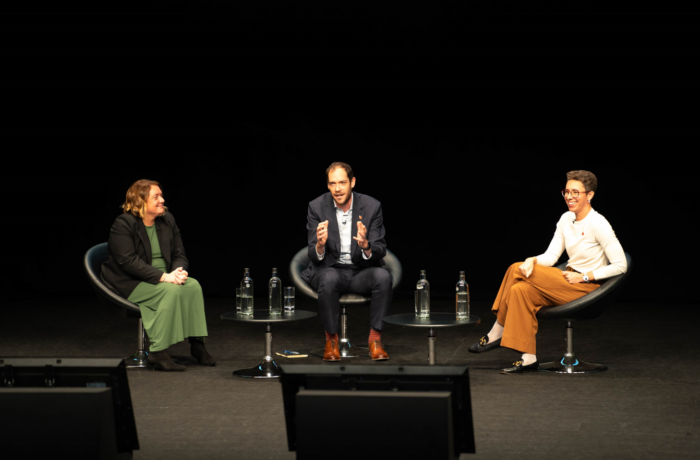
Pearson (pictured left) told delegates at the CIPD Annual Conference in Manchester that in the care sector, fully paid sick pay is unusual. She said that work to boost employee wellbeing had confirmed that staff wanted some degree of health benefit.
“I think previously, without listening, the assumption would have been, ‘well, Bupa is a private medical insurer, we can give them private medical insurance’. But actually, when you talk to employees, that’s not what they want because that comes with a P11D liability that they don’t want to carry.”
P11D liability
Employers are required to fill out a P11D form to report certain benefits to HMRC, such as PMI, company cars or season ticket loans, because they are considered to be taxable.
The P11D liability refers to the tax and national insurance contributions an employer, and sometimes an employee, will need to pay based on the amount reported.
Pearson said that employees wanted specific medical help and support, which could be getting to see a GP or help with musculoskeletal or mental health.
“So we’ve developed a package of healthcare benefits that is good for them, because it specifically focuses on the areas where they want help and some speed through the system, but doesn’t load them with a kind of burden of needing to contribute [via P11D].
“That’s unique to us, and it wouldn’t have happened without the active listening, but it helps our employees because it allows them to get to treatment quickly and not have to worry about absence from work that could result in statutory sick pay.”
Pearson’s comments came as part of a panel discussion on financial wellbeing strategy and how to make it as effective as possible.

Education ‘red herring’
Panel chair Emily Trant, chief impact officer at Wagestream (pictured right), said that the focus on employee financial education can be “a bit of a red herring” as people largely know what they need to do.
The key to boosting financial wellbeing is to give employees the tools to enable them to take action, agreed Trant and fellow speaker Owain Service, CEO at behavioural science research firm CogCo (pictured in the middle of the panel).
Research conducted by Wagestream and CogCo earlier this year suggests that better financial wellbeing at work is not about employers telling people what they should be doing.
Trant said: “We know what we should be doing, but [the research showed that] enabling action is a positive driver for financial wellbeing.”
For example, everyone knows it is a good idea to save money, but taking action to do it is less straight froward.
The panel pointed to the example of workplace savings as a way employers can support workers to take action to save money.
Offering a workplace saving programme helps to remove the barriers to saving, such as choosing which provider to save with, the effort of opening an account, setting up the payments to transfer payments and even deciding how much money to transfer. Employer schemes can smooth the path to saving and help create long lasting saving habits that improve resilience and financial wellbeing.
More examples of how employers can enable workers to take action are outlined in the report ‘The State of Financial Wellbeing 2024’ from CogCo and Wagestream.